
Ask an analytics team how their work is going and you’ll often hear about usage: number of reports, active users, views per week. Those numbers are easy to collect and nice to show. But they answer the wrong question.
A report can be opened every day and change nothing. Another can be used once a quarter and redirect a significant investment. If we want data and AI teams to be treated as strategic partners rather than service desks, we need a better way to talk about value.
Usage is a signal, not the outcome
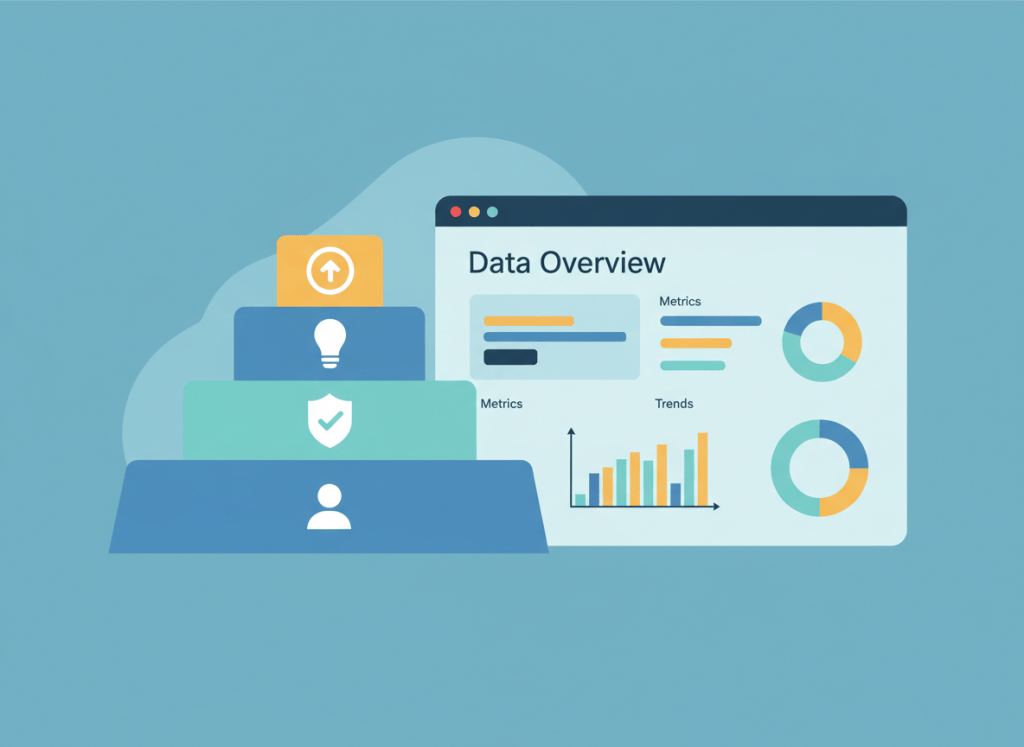
Usage tells you that something is available and found. It doesn’t tell you whether it is trusted, whether it changes decisions, or whether those decisions produce results. I find it useful to think in four layers:
- Adoption – Are the intended users actually using it? (Usage, frequency, reach.)
- Trust – Do they rely on it instead of their own spreadsheets? (Fewer shadow reports, fewer “which number is right?” questions.)
- Decision impact – Does it change what people do? (Examples of decisions made, processes changed, meetings shortened.)
- Business outcome – Does that change produce measurable results? (Time saved, cost avoided, revenue or efficiency gains.)
Most teams measure layer 1 well, layer 2 occasionally, and layers 3 and 4 almost never.
Define value before you build
The easiest moment to define value is at the start, when a stakeholder asks for something. As a product owner, I try to agree on three things before any development begins:
- The decision or process this product will support.
- What “better” looks like – faster, more accurate, less manual, more consistent.
- How we’ll know – even a rough, qualitative indicator is better than none.
This doesn’t need a heavy business case. A few lines in the backlog item are enough to change the conversation from “can you build this?” to “what are we trying to improve?”
Make time savings visible
One of the most underrated sources of value in analytics is time given back. Automating a manual report, removing a monthly reconciliation, or replacing three spreadsheets with one trusted dataset frees people for higher-value work. These gains are real but invisible unless someone writes them down. A simple before/after estimate, validated with the users themselves, is often the most credible value story a data team can tell.
Retire what doesn’t deliver
Value realization isn’t only about proving success. It’s also about having the discipline to stop. Reports that nobody uses still cost maintenance, refresh capacity and attention. A periodic review – keep, improve, retire – keeps a portfolio healthy and frees capacity for work that matters.
Why this matters more with AI
As organisations invest in AI, the pressure to show return will only increase. AI use cases are often more expensive to build and harder to explain than traditional reporting. Teams that already have a habit of defining and tracking value will find it much easier to prioritise the right AI investments and to stop the wrong ones early.
Measuring value is less about sophisticated frameworks and more about asking, consistently and early: what will be different because this exists?

Leave a Reply